How NOT to Budget Your First Paycheck (And Still Be Broke on Day 12)

Your first paycheck feels like winning. Then rent shows up and reminds you this is a subscription called adulthood. With recurring fees. And no cancel button.
Welcome to How NOT to Budget Your First Paycheck: the classic ways to be broke by day 12—followed by a simple system you can use even if you hate budgeting.
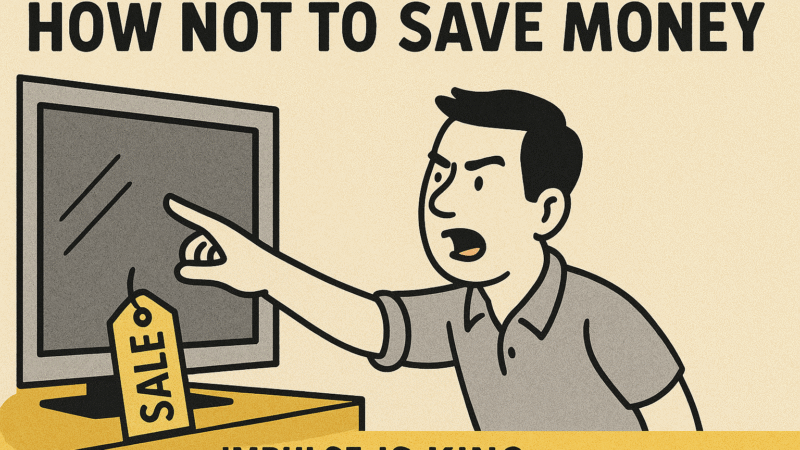
1) Spend first, budget later
Future-you is already tired and would like to unsubscribe from this plan.
Do this instead: pay essentials first (rent, bills). Then savings/debt. Then fun. The order matters.
2) Upgrade your lifestyle the moment money hits
New income makes people buy new obligations. Then the stress returns, but now with better shoes.
Do this instead: upgrade slowly. Wait 2–3 pay cycles before you lock in new recurring costs.
3) Forget the once-a-year costs exist
Insurance, gifts, repairs, subscriptions… they don’t disappear. They just ambush you.
Do this instead: create a “future expenses” bucket. Treat it like a bill.
4) Save nothing because “it’s not much anyway”
Small savings feels pointless… until it saves you from a not-that-big crisis that happens today.
Do this instead: automate something tiny. The goal is the habit, not the hero moment.
5) Track nothing and rely on vibes
Vibes are not a financial system. They’re a mood.
Do this instead: do a 10-minute weekly check: what came in, what went out, what surprised you.
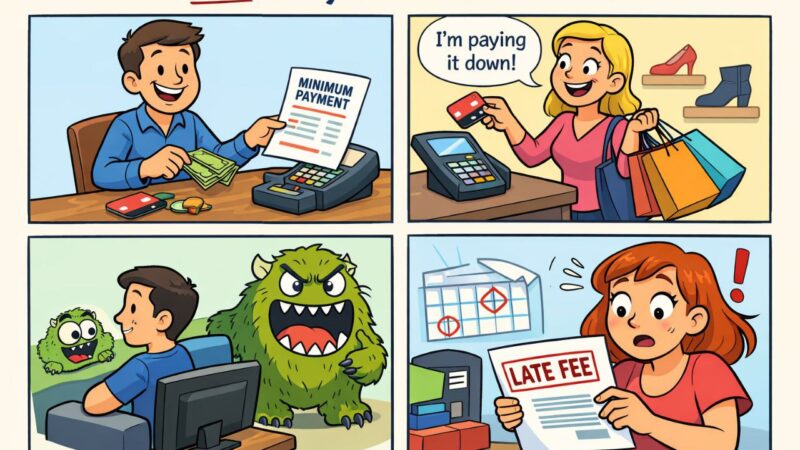
6) Ignore debt and call it “later problem”
Debt doesn’t disappear. It just sends invoices with attitude.
Do this instead: autopay minimums, then attack one balance with extra. Keep it boring.
A simple paycheck split (steal this)
- Needs: rent, bills, groceries
- Savings/Debt: emergency fund, credit cards, etc.
- Wants: fun, eating out, “I deserve this” spending
A real example (so it’s not abstract)
Let’s say you have $1,000 after taxes. You don’t need the perfect ratio—you need clarity.
- $650 needs (housing, bills, basics)
- $200 savings/debt (even $50 is fine—start small)
- $150 wants (fun that doesn’t ruin your week)
If your “needs” are higher, your “wants” go down. It’s not a moral failure. It’s math.
The “minimum viable budget” (for people who hate budgeting)
- One day: autopay essentials
- One day: automatic transfer (savings or debt)
- Once a week: 10-minute check-in
If that’s all you do, you’re already ahead of most people.
Stop the silent leaks
If your paycheck evaporates, it’s often not one big purchase—it’s 17 small ones that feel harmless individually. Subscriptions are the biggest offender because they’re invisible.
Do this instead: do a monthly audit. Cancel what you don’t use. Here’s the playbook: How NOT to Cancel Subscriptions.
Food is usually the second leak
When people say “I don’t know where my money goes,” a suspicious amount of it is going into delivery fees and sad last-minute convenience.
Do this instead: a low-effort meal plan. Not a transformation. Just fewer emergency orders. (If you want the comedy version: How NOT to Meal Prep.)
Mini FAQ
- “What if I’m paid weekly?” Same order: needs → savings/debt → wants. Just smaller chunks.
- “Do I need an app?” Only if you’ll use it. Notes + calendar reminder works.
- “What if I’m already broke?” Start by stopping leaks and building a tiny buffer. Even $10 saved is movement.
One last rule
If you’re not sure what to do, choose the option that reduces stress next week, not the option that feels good today. That’s basically budgeting in one sentence.
Conclusion
The goal isn’t to become a spreadsheet wizard. It’s to stop being surprised by your own bank account. Boring consistency beats financial chaos every time.
If you’re also trying to build habits without hating your life, How NOT to Start Running is strangely relevant. If you want to stop shrinking your clothes while you’re at it, How NOT to Do Laundry.