How NOT to Sleep at Night (A Revenge Bedtime Procrastination Guide)

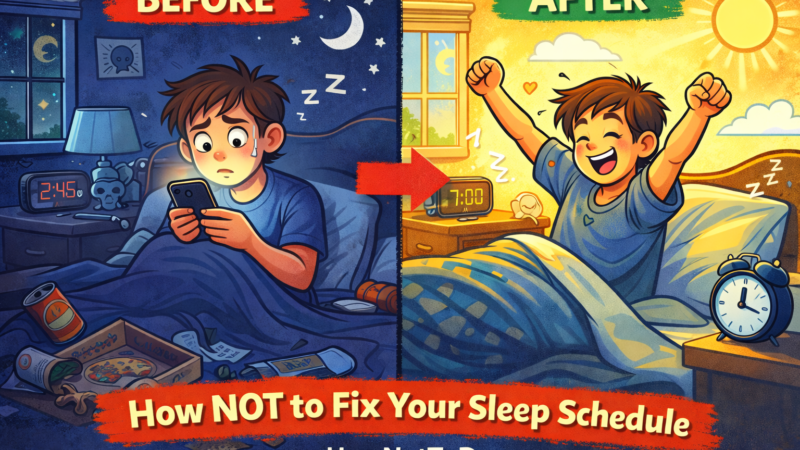
Sleeping at night is supposed to be the easiest thing you do all day. And yet, here we are: wide awake, scrolling, negotiating with ourselves like, “Just one more video.”
Welcome to How NOT to Sleep at Night: a lovingly sarcastic list of mistakes that wreck your sleep—followed by what to do instead (without turning your life into a monastery).
1) Drink caffeine “late afternoon” (aka: 6 PM)
Nothing says “rest” like a stimulant with a long half-life.
Do instead: Set a caffeine cutoff (often 8 hours before bed). If you’re sensitive, make it earlier.
2) Turn your bed into an office, dining table, and doom-scrolling lounge
Your brain: “This is the place where we stress.” Also your brain: “Why can’t we sleep?”
Do instead: Keep the bed for sleep (and, you know, romance). If possible, keep work and screens out of it.
3) Try to “fix” sleep by going to bed 3 hours earlier
Congrats, now you have 3 extra hours to worry about everything you’ve ever done.
Do instead: Shift by 15–30 minutes every few days. Keep wake time consistent.
4) Use your phone as a bedtime therapist
Scrolling is not self-care. It’s emotional cardio.
Do instead: Set a 20-minute wind-down: dim lights, low-stimulation activity, and put the phone on the other side of the room.
5) Eat a huge meal right before bed
Your stomach would like to file a complaint.
Do instead: Aim to finish heavy meals 2–3 hours before bed. If you need something, keep it light.
6) Watch something “relaxing” (true crime)
Ah yes. Murder as a lullaby.
Do instead: Choose low-stakes content or audio (calm music, a boring podcast, a gentle show you’ve already seen).
Quick reset: a simple 7-day plan
- Pick a fixed wake time.
- Get bright light within 60 minutes of waking.
- Cut caffeine earlier.
- 30–60 minutes before bed: dim lights + no heavy content.
- If you can’t sleep after ~20 minutes, get up and do something calm, then return.
Conclusion
You don’t need a perfect routine. You need a repeatable one. Your future self—who is not a zombie—will thank you.